
Salary and Money
Do you need an MBA to be a product manager? What a product curriculum should cover instead
No, you do not need an MBA to be a product manager, and the job has no required degree. A university MBA is worth its six-figure cost mainly when you need a career reset, a recruiting network or a general-management path; if you mainly need product skills, a shorter program that makes you practise discovery, metrics, building, go-to-market and strategy on a real product gets you there faster.
No. Product management has no required degree, and a full-time MBA is an expensive way to acquire PM skills. Harvard Business School's cost of attendance page lists 2026-27 tuition of $84,760 and a nine-month total of $130,318 for a single student, and that is one year of a two-year program. The degree can still be the right call, but for reasons that have little to do with learning how to write a problem statement or read a retention curve.
Why did product management stop being an MBA job?
The role used to sit inside marketing, and marketing hired from business schools. Marty Cagan's 2012 SVPG post Product Management Then and Now sums up the shift in one line: under "Education" the old product manager has an "MBA" and the new one has "Computer Science or User Experience Design". Cagan says up front that his list "is a little bit exaggerated (but not much) to shine a light on the key behaviors."
Ken Norton makes a similar point about degrees in general in his essay How to Hire a Product Manager: "Some managers I've known insist on hiring only PMs with computer science degrees. I'm not as snobby." He still favours people who have worked in technical roles, because the job rewards being able to talk to engineers and follow the technical detail.
The pattern in both is that hiring managers look for evidence of how you think about users, data and trade-offs. A degree is one proxy for that. A shipped product, a clear discovery story or a well-argued metric choice is a more direct one, and none of those require a business school.
What does an MBA cost compared with a product-focused program?
The gap is large enough that it should drive the decision on its own terms, not as a footnote.
| Option | Price | Length | Source |
|---|---|---|---|
| Harvard Business School MBA, tuition only | $84,760 per year (2026-27) | Two years, full time | HBS cost of attendance page |
| Harvard Business School MBA, nine-month cost of attendance | $130,318 (single student, 2026-27) | Per academic year | HBS cost of attendance page |
| Builders Camp Product MBA, Standard | €649, one-off | 10 weeks, part time | Builders Camp pricing |
| Builders Camp Product MBA + Lifetime | €849, one-off | 10 weeks plus Lifetime Membership | Builders Camp pricing |
HBS is the top of the market, not the average, so read the first two rows as a ceiling. The comparison also leaves out what a full-time MBA costs in wages you do not earn for two years, which for a mid-career professional can be larger than the tuition. What the table still shows is the order of magnitude: a degree is a six-figure decision, and a practitioner program is a three-figure one.
When is a university MBA actually worth it for a PM career?
A full-time MBA buys three things a short course cannot: time out to reset your career, a structured recruiting season, and a network of classmates who will be senior in five to ten years. Those are worth paying for in a few specific situations:
- You are changing industry, country and function at the same time, and you need a recruiting pipeline because you have no network to switch through.
- You want a general-management or strategy path where the degree itself is still used as a filter, and you have checked that in the job postings you are targeting.
- Your employer is paying, or the school is offering meaningful scholarship money, which changes the calculation completely.
If none of those apply and your goal is to do the PM job better, the MBA is mostly a business core (finance, accounting, operations, organisational behaviour) with product management as an elective. Useful, but not aimed at the work.
When does an MBA not help you get or grow a PM job?
An MBA does not substitute for product evidence. Interviewers for PM roles ask you to walk through a decision you made, the data behind it and what you would change. A classmate with an MBA and no product work faces the same question as someone without one.
It also does not help much if you already work in product. A PM with three years of experience who wants to move into leadership gets more from deliberate practice on strategy, metrics and stakeholder decisions than from two years away from the job. And it does not help with the tooling shift of the last few years: building a working prototype with an AI app builder, automating a workflow, or evaluating an AI feature are practical skills that business school cores are not designed around.
What should a product-focused curriculum cover?
Whatever you choose, judge it against the work a PM actually does in a normal quarter. A curriculum that skips any of these leaves a gap you will feel in the first month of the job:
- The role and discovery. How to frame a problem, talk to users, and decide whether an opportunity is worth pursuing.
- Data and metrics. Choosing a success metric, reading a funnel and a retention curve, and running an experiment without fooling yourself.
- Building with AI. Getting from an idea to a working prototype yourself, so discovery conversations happen around something people can click.
- AI product judgment. Knowing where AI adds value, how to evaluate it, and what can go wrong in production.
- Go-to-market and growth. Positioning, launch planning, acquisition and retention loops, and pricing.
- Operations and strategy. Running the team's rituals without bureaucracy, then setting a vision and a roadmap that connect to real opportunities.
The test for any program is whether you apply each topic to one product, week after week, or just watch lectures about it. Applied work is what turns into the interview story.
Where does the 10-week Builders Camp Product MBA fit?
The Builders Camp Product MBA is a 10-week, cohort-based program, not a degree. It is an independent program with no university affiliation and no accreditation, and "MBA" is the product's name, not a claim of equivalence. It runs 10 live sessions of 120 minutes each, capped at 20 seats per cohort, with live lessons on business days at 6 PM WET and every session recorded. Edition 4 runs from September 14 to November 30, 2026.
The curriculum is organised in three blocks, Foundations, AI and Building, and Business. The Edition 4 module titles are:
| Week | Module | Director |
|---|---|---|
| 1 | The Product Manager Role + User Research | Francesco Gatta |
| 2 | Data & Analytics | Mário Araújo |
| 3 | Intro to Vibe Coding | Ricardo Luiz |
| 4 | Building with AI | Filipe Pereira |
| 5 | AI & Machine Learning | Nuno Carneiro |
| 6 | AI Automations | Nuno Vilaça |
| 7 | Product Marketing | Hugo Macedo |
| 8 | Growth Tactics | Mário Araújo |
| 9 | Product Operations | Hugo Froes |
| 10 | Product Strategy & Roadmapping | Andre Albuquerque |
Participants build a capstone product week over week, which culminates in a Demo Day in week 10, and each participant gets three 1:1 mentorship sessions with a mentor from the Builders Camp network. Completing the program earns the Product MBA Certificate of Completion, integrated with LinkedIn.
What is the strongest case against a short program?
A 10-week program cannot give you what two years at a business school gives you: a large alumni network, a campus recruiting season, and a credential that some employers still filter on. If your plan depends on those three things, a practitioner program is the wrong purchase, and saying otherwise would be selling you something.
What a short program can do is close a skills gap quickly while you keep your job and your salary. It is also a cheaper way to test whether product is the direction you want before committing to a degree. If you are still deciding between formats, compare prices across options in how much a product management bootcamp costs, weigh credentials in is a PM certification worth it, and read how to become a product manager without a degree if you are coming in without one.
How do you decide in one sitting?
Write down the gap you are actually trying to close, then match it:
- Network and a career reset across industries: a full-time MBA, ideally sponsored or funded.
- Product skills applied to a real product, while employed: a structured, part-time practitioner program.
- A first foothold with no budget: one shipped side project and a portfolio, starting from how to become a product manager with no experience.
The Product MBA costs €649 for Standard or €849 with the Lifetime Membership included, paid once, with 20 seats per cohort. See the Product MBA page for the curriculum and the next cohort's dates.
Bootcamps referred in this Guide
Frequently asked questions
Do you need an MBA to become a product manager?
No. Product management has no licensing body and no required degree. Hiring managers screen for judgment about users, data and trade-offs, which you can show through shipped work and interview answers. An MBA is one way to build and signal those skills, not a prerequisite.
When is a full-time MBA worth it for a product career?
It earns its cost when you need what only a business school provides: a structured career reset with a recruiting pipeline, a network in a new city or industry, or a path toward general management where the degree itself is a filter. If your employer sponsors it, the calculation changes again. If you mainly want PM skills, it is an expensive way to get them.
How much does a top MBA cost?
Harvard Business School lists 2026-27 tuition of $84,760 and a nine-month cost of attendance of $130,318 for a single student, on its own cost of attendance page. That is one year of a two-year program, before any scholarship.
Is the Builders Camp Product MBA an accredited degree?
No. The Product MBA is an independent 10-week program. It is not an accredited degree and has no university affiliation; the name is a product name, not a claim of degree equivalence. Participants who complete it receive the Product MBA Certificate of Completion, which is LinkedIn-integrated.
How much does the Product MBA cost?
Standard is €649 and covers the full 10-week program: live lessons, three 1:1 mentorship sessions, the certificate and the private cohort community. MBA + Lifetime is €849 and adds the Builders Camp Lifetime Membership. Payment is one-off via Stripe with sales tax included.
Can I do the Product MBA while working full time?
Yes, that is the format it is built for. Live lessons run on business days at 6 PM WET (Lisbon time), the program is 100 percent online, and every live session is recorded and posted within 24 hours if you miss one.
Is an MBA better than a product management certification?
They answer different questions. A certification checks that you learned a framework; an MBA is a two-year career and network reset with a business core. Neither proves you can run discovery or defend a roadmap, which is what PM interviews test. Pick based on the gap you actually have.
Sources
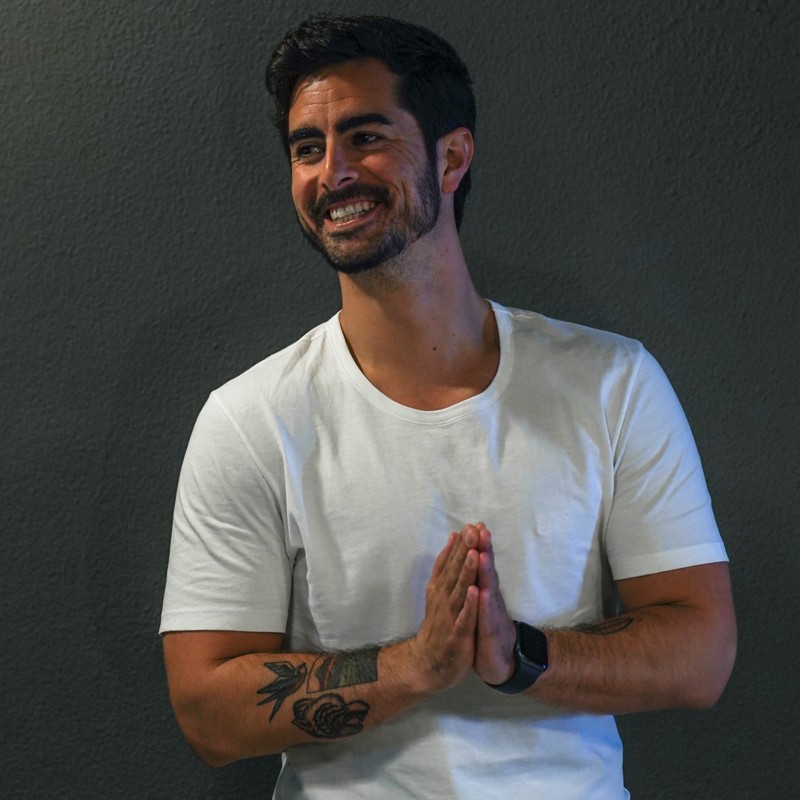
Andre Albuquerque
CEO of Builders Camp, SuperOperator, and other companies. Building products.
CEO of Builders Camp, SuperOperator, and other companies. Building products.
LinkedInMore guides by Andre AlbuquerqueLast updated 2026-09-27
Researched from Builders Camp's bootcamp, track and masterclass material and the sources listed on this page, drafted with AI, and fact-checked against every source cited.
Related guides
How Much Does a Product Management Bootcamp Cost?
A single product management course runs from about $150 for a self-paced certificate to $4,999 for a live cohort...
Andre AlbuquerqueIs a Product Management Certification Worth It?
A product management certification can structure your learning and signal effort, but none of the certifying bodies...
Andre AlbuquerqueHow to become a product manager without a degree
Roughly 17 percent of product managers have no bachelor's degree, according to a 2022 industry survey, which makes this...
Andre AlbuquerqueHow to become a product manager with no experience
You do not need a PM job title to become one. Learn the core PM toolkit in a deliberate order, build two or three real...
Andre Albuquerque