
Tools
How to use AI for roadmap planning without outsourcing the sequence
The useful AI move in roadmap planning is synthesis, not sequencing: paste six categories of scattered input and get back the problems that appear in more than one source. The order those problems get worked in is a commitment about what the company can survive getting wrong, and that stays with a person.
What is genuinely hard about roadmap planning?
Not the drawing. The inputs. By the time a quarter needs a roadmap, the evidence lives in sales call notes nobody has read, a support tag that has been quietly climbing, an exec memo from six weeks ago, a technical debt register the engineering lead maintains alone, last cycle's OKRs and what they missed, and about nine opinions. They are in six formats and no single person has read all of them.
That is a reading problem before it is a judgement problem, and reading problems are where models are strongest. Ask a model to find every problem that appears in more than one of those sources, with a quote from each source, and you get something no individual on the team currently has: the intersection. Silicon Valley Product Group's long standing complaint about roadmaps is that they become lists of features with dates rather than commitments to outcomes, and one reason is that the outcome evidence was never assembled in one place cheaply enough to argue over.
Which inputs are worth the paste?
Six categories, and the sixth is the one that gets skipped.
| Input | Concrete form | What it prevents |
|---|---|---|
| Customer evidence | Interview notes, win and loss reasons, verbatims | A roadmap built from internal opinion |
| Support and churn themes | Tag counts, cancellation reasons | Optimism about what is already broken |
| Commitments already made | Contracts, public promises, regulatory dates | Sequencing that breaks a signed obligation |
| Technical constraints | Debt register, platform migrations in flight | Bets that cannot start until something else lands |
| Current strategy or goals | The OKRs or strategy doc as written | Work that ladders up to nothing |
| Honest capacity | People, days, on call, hiring gaps | A plan sized for a team that does not exist |
Leave out capacity and you get a roadmap that assumes four squads when you have two and a half. That is the single most common defect in a drafted roadmap, and it is an input failure rather than a model failure.
A worked quarter: from six documents to three candidate sequences
Take a real shape. You paste in 30 sales call summaries, a support export with the top 12 tags by volume, an exec memo naming two priorities, a debt register with 9 items, last quarter's 3 objectives and their scores, and a capacity note saying you have two squads for 11 weeks with one of them losing a person for four of those.
Run it in three separate passes rather than one. First: what problems appear in at least two sources, each with quotes. Second: for each problem, what would have to be true for it to be worth a quarter of two squads' time. Third: three candidate sequences for the quarter, each with a different logic (fastest evidence first, biggest commercial commitment first, unblock the platform first) and the explicit cost of each.
Three sequences is the format that keeps the model honest. Asking for one answer gets you a confident answer; asking for three competing ones gets you the trade offs, which is the thing you actually needed. The What Matters guidance on writing goals as an objective with 3 to 5 supporting key results is a useful check at this point: if a candidate sequence cannot be expressed that way, it is a list of projects rather than a bet.
Why does the sequencing judgement stay human?
Because sequencing encodes what the company can survive getting wrong. Two problems can score identically on every input a model can see and still belong in a specific order, because one of them is the one your largest customer mentioned on a renewal call and the other is not. That fact lives in a person's head, or in a CRM field nobody exports, and it moves the order.
Sequencing also encodes who is available to build what. A bet that depends on the one engineer who understands the ingestion pipeline cannot start in the window where that engineer is finishing something else, no matter how well it scores. Product Strategy spends 2 weeks on exactly this move, translating bets into sequencing, milestones and measurable outcomes rather than into a feature list with dates, and the reason it takes two weeks is that the judgement does not compress.
The blunt version: a model tells you what is worth doing, and it is often right. It cannot tell you what you can afford to be wrong about this quarter.
Where a drafted roadmap fails quietly
The dangerous failure is not a wrong item. It is a roadmap that is internally consistent, well formatted, and built from an input you forgot to include.
A team runs this pass with everything except the technical debt register, because the debt register lives in a wiki nobody linked. The output is a clean four bet quarter, all four customer facing, all four defensible. It goes to the exec review and passes, because nothing in it is wrong. Six weeks later, bet two stalls because it needed the auth migration that was sitting in the register, and the quarter reshuffles under pressure with no time to re argue the trade offs properly.
Nothing about the model caused that. The defence is a fixed input checklist you run before the pass, treated as seriously as the prompt, plus one review question after it: which of the six input categories is thinnest in this draft, and who owns the missing one?
How do you keep a drafted roadmap from reading as certainty?
Rewrite it. A generated roadmap arrives with the formatting of a decision and the epistemic status of a suggestion, and in an exec review formatting wins. Take the draft, cut every bet you cannot defend out loud for two minutes, and write the surviving ones in your own sentences with the assumption named: we are betting that reducing onboarding time moves activation, and if activation does not move by week six we stop.
Atlassian's roadmap material makes the related structural point that a roadmap is a communication artefact as much as a plan. That cuts both ways with a drafted one: the fluency that makes it easy to circulate is the same fluency that stops people asking whether the evidence underneath it is real. State the confidence level per bet, out loud, in the document. It is the cheapest correction available and almost nobody does it.
The skill under the tool
Roadmap synthesis gets cheaper every year. The judgement about sequence does not, which is why the part worth investing in is the strategy layer rather than the prompt. Product Strategy covers market segmentation, strategic trade offs and the roadmap as an execution tool across 2 weeks, and How to Design OKRs covers the goal layer a roadmap has to ladder into, including the failure modes a drafted roadmap reproduces enthusiastically: vanity objectives, unowned key results and metric overload. Both sit inside the Product Leadership Track.
See the Product Strategy bootcamp
For the layers either side, AI for prioritization covers scoring the candidates before they reach a sequence, AI for OKRs covers the goals the roadmap serves, and the glossary entry on OKRs defines the terms this page assumes.
Bootcamps referred in this Guide
Frequently asked questions
What part of roadmap planning does AI actually help with?
Synthesis. Roadmap inputs arrive as sales call notes, support themes, an exec memo, a technical debt register and last quarter's misses, in five different formats. A model reads all of them at once and returns the problems that appear in more than one source, which is the work that usually never gets done properly.
What must stay a human decision?
The sequence. Ordering bets depends on commercial commitments, on who is available to build what, on what the company can survive getting wrong, and on political capital nobody writes down. A model can propose an order and argue for it. Signing it is a commitment and belongs to a person.
Which inputs should I paste in?
Customer evidence, support and churn themes, the commercial commitments already made, the technical constraints, the current strategy or OKRs, and an honest account of team capacity for the period. The last one is the one teams skip, and skipping it produces a roadmap sized for a team that does not exist.
How do I stop it producing a feature list?
Ask for problems and outcomes first, and forbid solution names in that pass. Then ask, separately, for candidate bets against each problem. Combining the two steps in one prompt reliably produces a list of features with the problems reverse engineered onto them.
Is a generated roadmap safe to show executives?
Not as generated. A drafted roadmap is an argument with confident formatting, and formatting reads as certainty in an exec review. Rewrite it in your own words, cut what you cannot defend, and name the assumptions you are betting on.
How often should this pass be rerun?
Once per planning cycle, against fresh inputs. Rerunning it weekly produces churn, because a model given slightly different inputs will produce a meaningfully different order and you will mistake that noise for new information.
Does Builders Camp teach a specific roadmap tool?
No. Product Strategy runs 2 weeks on making choices you can defend and sequencing bets over time, taught as a method rather than through a named product.
Sources

Andre Albuquerque
CEO of Builders Camp, SuperOperator, and other companies. Building products.
CEO of Builders Camp, SuperOperator, and other companies. Building products.
LinkedInMore guides by Andre Albuquerque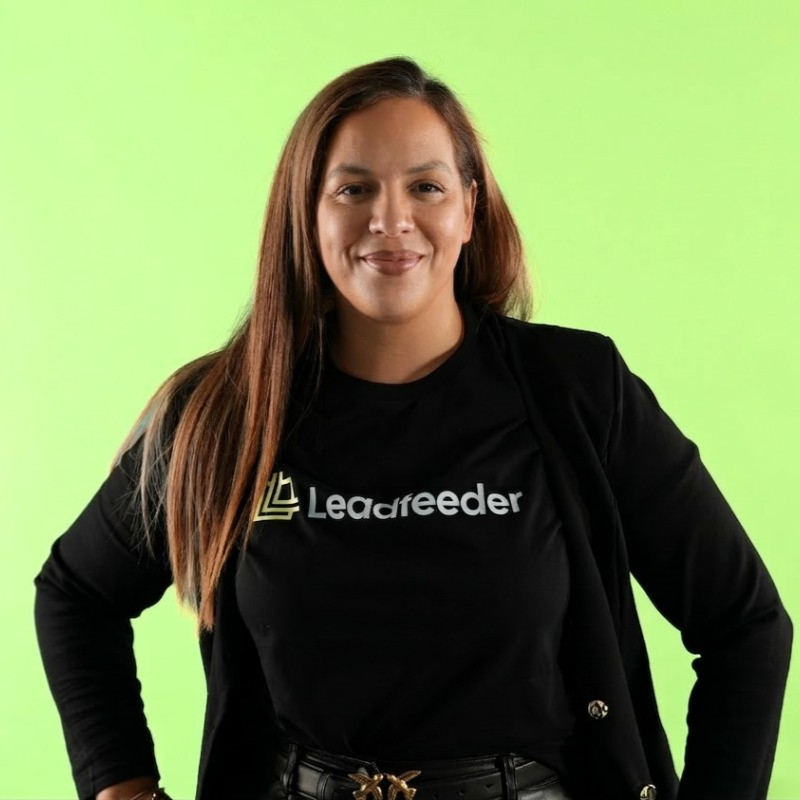
Inês Lourenço
CPTO and founder at Compound Works, Inês helps product leaders build AI-powered operating systems for their teams. She designs context layers, agent workflows, and decision frameworks that let PMs move faster, think clearer, and execute at a higher level.
CPTO and founder at Compound Works, Inês helps product leaders build AI-powered operating systems for their teams. She designs context layers, agent workflows, and decision frameworks that let PMs move faster, think clearer, and execute at a higher level.
LinkedInMore guides by Inês LourençoLast updated 2026-09-18
Researched from Builders Camp's bootcamp, track and masterclass material and the sources listed on this page, drafted with AI, and fact-checked against every source cited.
Related guides
How to use AI for prioritization when an AI score is an argument, not an answer
A model will score 60 backlog items on RICE in about two minutes, and at least two of the four inputs it uses will be...
Andre Albuquerque & Inês LourençoHow to use AI for OKRs that survive contact with the quarter
The highest value use of AI on OKRs is the stress test, not the draft: ask for the data source and query behind every...
Andre Albuquerque & Inês LourençoHow to use AI for capacity planning against real constraints, not optimism
Capacity planning fails on the subtractions, not the total: a model applying holidays, on-call, hiring loops and a...
 Andre Albuquerque & Tiago Pedro da Costa
How to synthesise a roadmap with Claude Code, and where the agent must not decide
An agent can assemble every roadmap input into one candidate list with sources attached and name the contradictions...
Andre Albuquerque & Inês Lourenço